R Ingalls Best Friend on Little House on the Prairie
The Untold Truth Of Little House On The Prairie
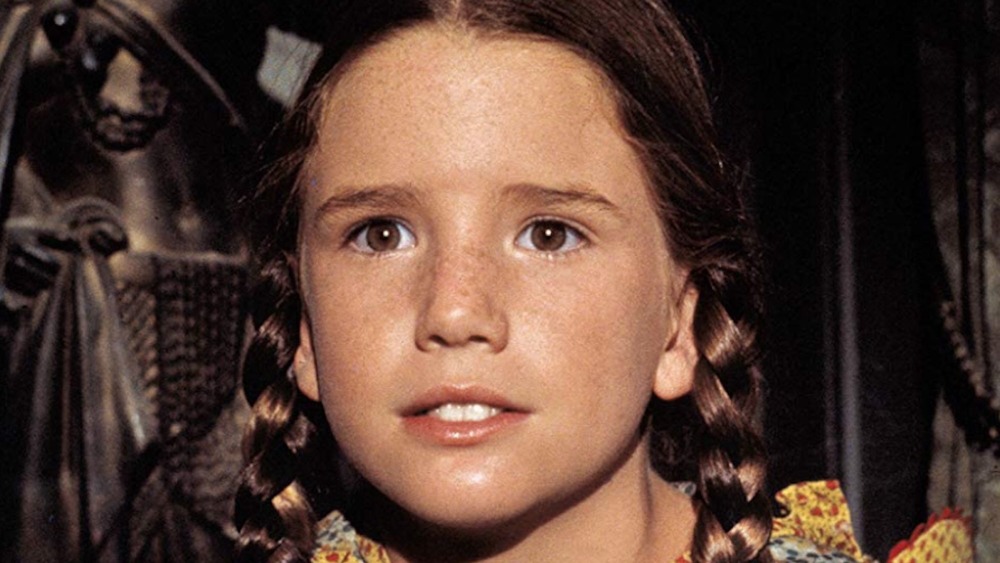
Based on the classic children'due south novels by Laura Ingalls Wilder, Fiddling House on the Prairie left a huge mark on a lot of our childhoods. Over the decades, the show has carved out its own cultural niche, and with ix seasons — and years of reruns — Little Firm has found a huge audition.
In fact, fans of the show appreciate it for a diversity of different reasons. Some, affectionately called "bonnetheads," similar the historical setting and the wholesome family vibe. Others merely sit around with buckets of popcorn, waiting to see what wild thing might happen adjacent on a show that oft delights in melodrama and the hilariously bizarre. And more a few only have hoped that Michael Landon would take his shirt off over again.
And with such a popular series, it should come as no surprise that there are quite a few behind-the-scenes stories and fascinating facts for diehard fans. From backstage trivia and secrets of the bear witness's success to its lasting place in viewers' hearts, at that place'south a lot to talk about when it comes to examining the untold truth of Picayune Business firm on the Prairie.
Michael Landon'due south vision dominated Little House on the Prairie
Nbc Television/Getty Images
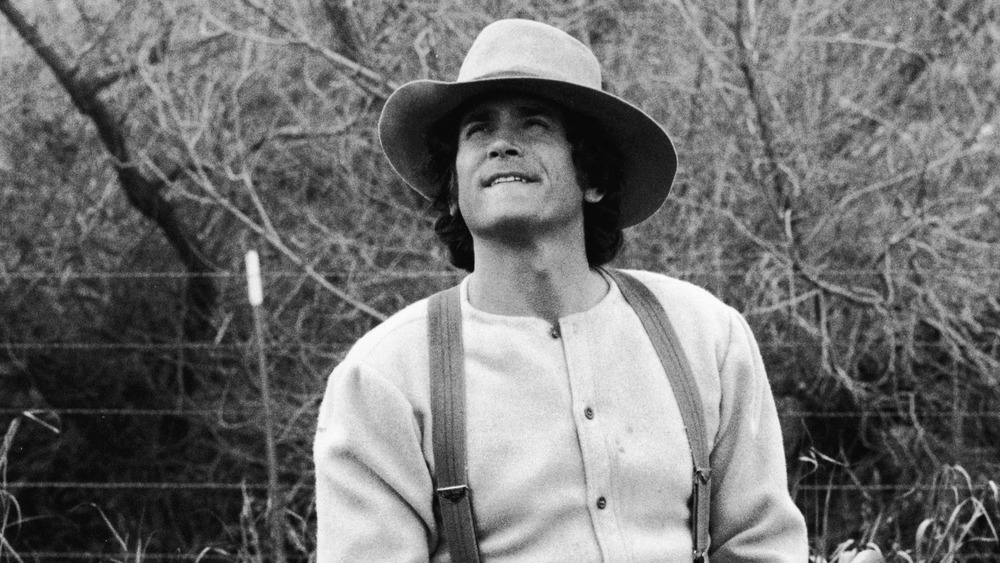
Piddling House on the Prairie had Michael Landon'southward stamp on information technology from the get-go, and he exerted a lot of creative command over the bear witness — so much, in fact, that he reportedly drove away Ed Friendly, his co-executive producer. In a 1974 interview with People, Friendly complained that Landon had no business being a writer or producer. He thought Landon strayed besides far from the books in giving the Ingalls family an easier life. Equally he said, "I've renamed the series How Affluent Is My Prairie? They have everything but a Cadillac."
But for some, Landon's cozier vision was a draw, and the show was a fine expression of his warmer side. Cindy Landon, his widow, told Closer, "If you sentinel Little House, truly information technology was similar watching Michael. The dear that he had for his family, the type of person he was — it was all apparent." She wasn't lonely in thinking that. In an interview with CBS, Melissa Gilbert said without hesitation, "The testify'due south values ... were admittedly a reflection of the values of our leader, of Michael Landon. He was that man. He believed that people are e'er really proficient at heart."
When Petty House on the Prairieserves as comfort viewing, viewers are responding to Landon'due south meliorate nature. He might've sacrificed historical accuracy and sanded the rough edges off of prairie life, but he too provided the show's sense of eye and fabricated it something viewers still detect reassuring.
Laura'due south worst enemy was Melissa Gilbert's best friend
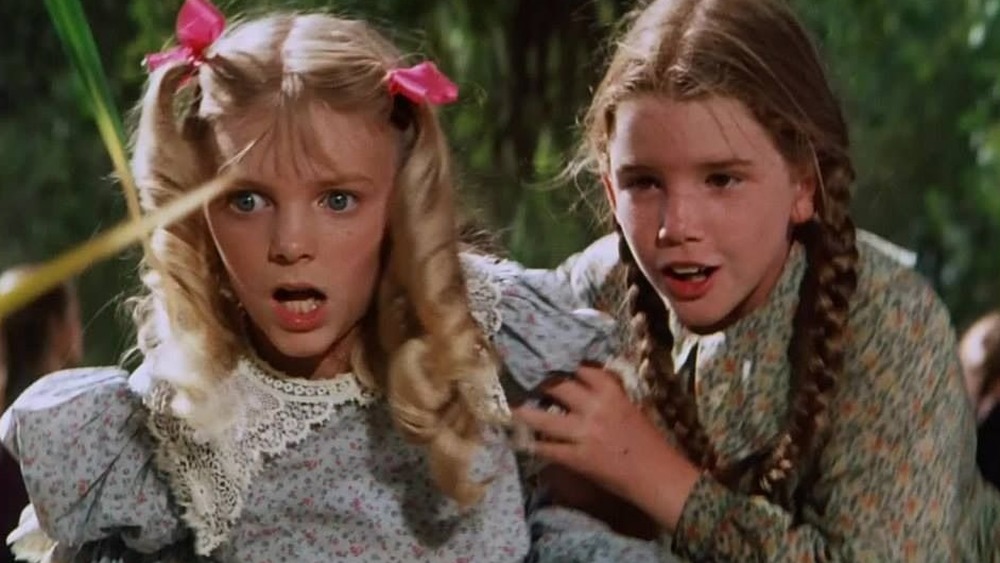
Laura Ingalls was ever butting heads with Nellie Oleson, but whenever the cameras weren't rolling, actresses Melissa Gilbert (Laura) and Alison Arngrim (Nellie) were inseparable. When they were off the set, that closeness could confuse loyal Little House on the Prairieviewers who couldn't see that there was a thick line between fiction and reality. As Melissa Gilbert said at EW'due south cast reunion, "The ii of usa would go places together, and people would try to protect me from her. Even when I was ten, I'd want to say, 'Come on, it'southward a Television show.'"
People expected to see Melissa Gilbert beingness chummy with the other Melissa — Melissa Sue Anderson, who played Mary, Laura'due south sister. Simply the 2 were never that shut. In an interview with AJC, Anderson put it tactfully, saying, "I honestly practice not have a lot of memories of the two of us. We were very, very dissimilar." She was a lot quieter and, in her words, less "zany" than Arngrim and Gilbert. So in her example, the TV show persona was a little more accurate. Mary was e'er the all-time-behaved Ingalls sister.
At the bandage reunion, Alison Arngrim joked about the same character-extra parallel. "[Anderson] looked at u.s. like we were full juvenile delinquents. I think she idea nosotros would become her in trouble if she hung out with us, which is perfect for her character because Mary was such a little narc."
Behind the scenes, the evidence was total of pranks
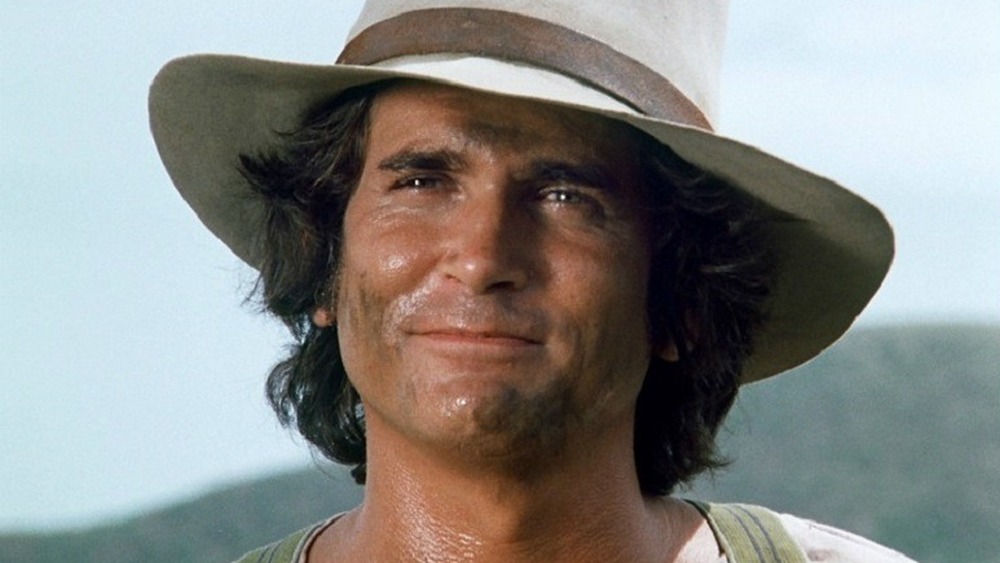
Michael Landon asked everyone on the evidence to work hard. Rachel Greenbush, ane of the twin actresses who played young Carrie Ingalls, reminisced in an interview with Closer that, "When it was time to work, you had to be focused."
But when it wasn't time for work, it was time for play, and the play could get as enthusiastic and goofy equally anyone could peradventure want. Inseparable buddies Melissa Gilbert and Alison Arngrim were constantly playing together. At a cast reunion, Gilbert talked to EW near how she and Arngrim used to organize "some ballsy games of tag and Crimson Rover."
However, the kids' fun had goose egg on what the adults could become upwards to. 1 of Melissa Gilbert's favorite stories to recount in interviews has to do with Landon's go-to trick for "wedlock security." During the show's run, Landon was an undeniable heartthrob, which may be the respond to why Pa Ingalls spent so much time shirtless. But while Landon was happy to convert crushes into ratings, he didn't always like fans hanging around the set up ogling him. Luckily, he had a surefire play a joke on to drive them abroad. Gilbert told Entertainment Weekly, "I'd catch frogs, and Mike would put the frogs in his mouth and walk over to people and talk, and so the frogs would spring out. ... [The women would] always scream." No kidding.
That home-cooked food was anything but
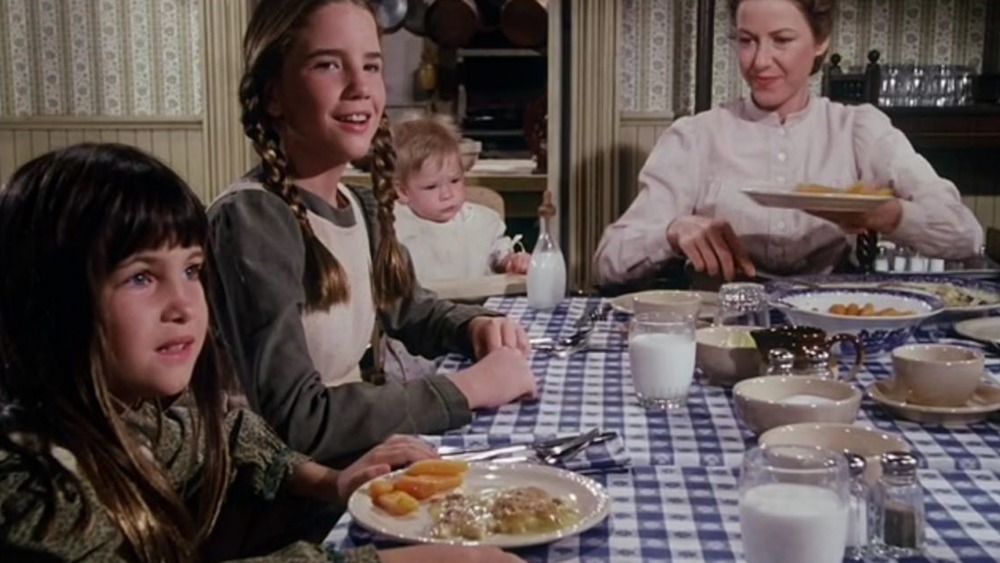
If you've ever watched Lilliputian House on the Prairie and pined for a taste of that pioneer cooking, getting it could be easier than you think.
Putting nutrient on the table might've been hard work for Ma Ingalls, only behind the scenes, the show kept things simple — and inexpensive. When Melissa Gilbert spoke with Parade to promote her new cookbook, she revealed a backstage tidbit that made it clear none of the recipes in her book could've stemmed from the show because what they were actually eating wasn't home cooking by whatever stretch of the imagination. Those Ingalls family dinners? Dinty Moore beef stew and Kentucky Fried Chicken, with a side of Pillsbury biscuits. Suddenly, that kitchen table looks a lot less like a romantic vision of times gone past.
But even if those dinners came together by virtue of a bulldoze-thru window and a quick trip to the convenience shop, the results weren't besides shabby. At least not according to Gilbert, who admits, "I was ever the get-go one eating the actress food. I would just gorge myself!"
Sean Penn and Jason Bateman debuted on the bear witness
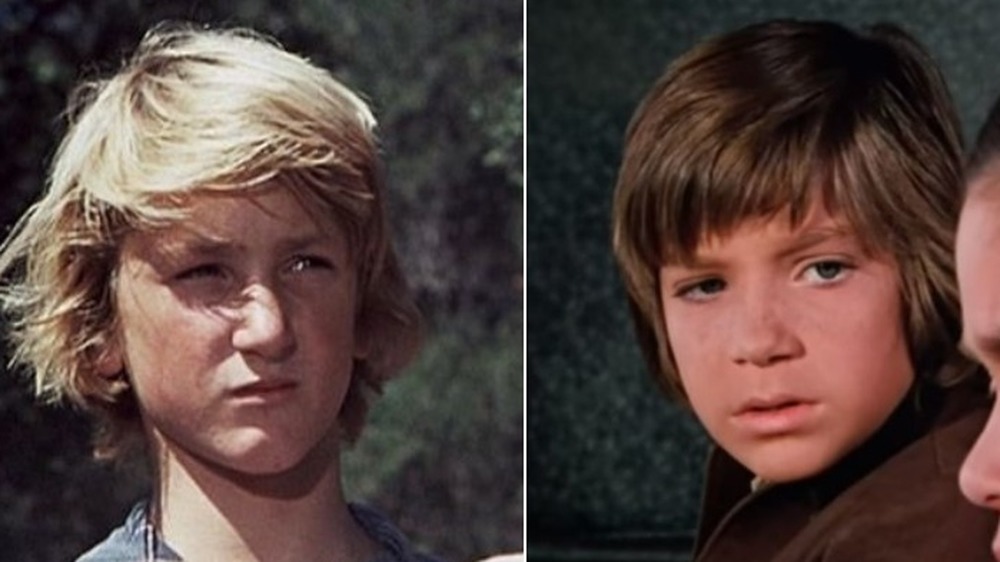
Before they became major movie and boob tube stars, Sean Penn and Jason Bateman were child actors, and they both got their starting time break on Piddling House on the Prairie.
Penn's first role is easy to miss, especially since he was uncredited. He was just one of a handful of unnamed extras who helped fill out the boondocks of Walnut Grove. It's easy to meet how he wound up with the role, though. His father, Leo Penn, was a longtime Boob tube director who worked on numerous '70s and '80s shows, and little Sean Penn's onscreen appearance was in one of his dad'south episodes, "The Voice of Tinker Jones." How'southward that for a "Bring Your Child to Work Day" experience?
Bateman, on the other hand, was an actual character on Little Business firm. Starting in the seventh flavour, he played Jason Cooper, an orphan the Ingalls family takes in. (He was one of several, actually. Fans will fondly recollect that the show liked its orphans.) The role — which he connected for 21 episodes — kicked off his long-running and tremendously versatile career, with Bateman moving back and forth easily between non only movies and TV but too comedy and drama.
Picayune House on the Prairie was a proficient place to exist a child actor
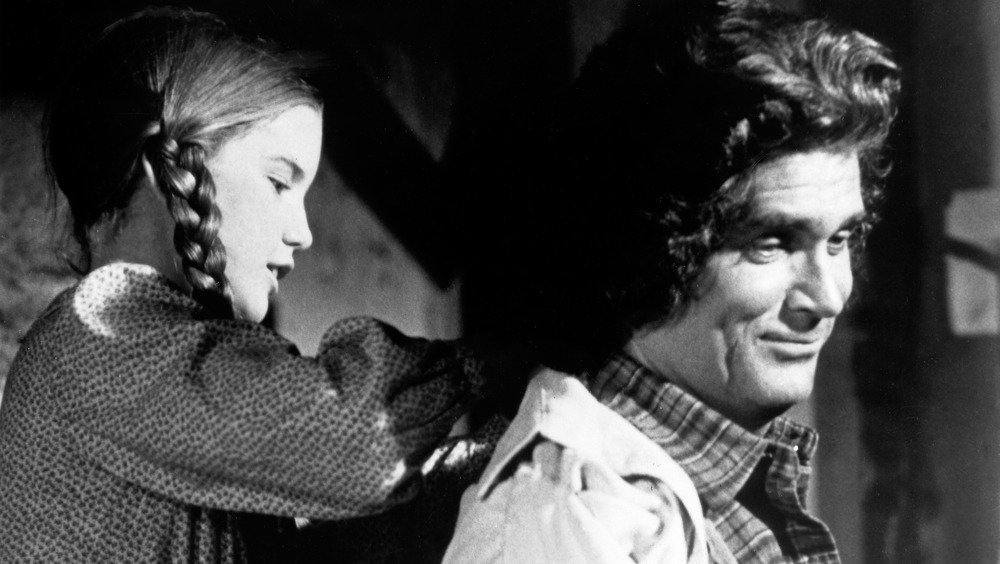
United Athenaeum/Getty Images
Being a child actor can be stressful, and plenty accept burned out or chosen to walk away from the business organization entirely. Since Trivial Business firm on the Prairie was a family bear witness that starred several young actors, its behind-the-scenes legacy could involve horror stories most kids asked to shoulder as well much work also shortly.
Just that's non the instance. The onetime child actors of Little House speak about their experience with real warmth. Why? Well, for ane thing, there was fun – games, crafts, and birthday parties complete with cake. It was as well a creatively and professionally rewarding feel, which meant a lot to the immature actors. In an interview with Parade, Melissa Gilbert said, "Nosotros were treated equally [kids], but then there were moments when we were actually shooting that I was treated no different than the adults. I was an developed contributor to an artistic endeavor. It was incredibly validating."
Michael Landon had a souvenir for finding the correct balance between offering support and demanding professionalism. And he knew how to adapt his standards for kids. He didn't inquire for more than they could give. According to Albert histrion Matthew Laborteaux, who spoke to EW, "As long as y'all showed upwardly on time, knew your lines, worked hard, and, you know, gave a south***, you were aces in his book." In a globe total of rough starts, Little Business firm seems to have offered a smooth runway and left its cast with fond memories.
Nine seasons gave the show time to wander off to some weird places
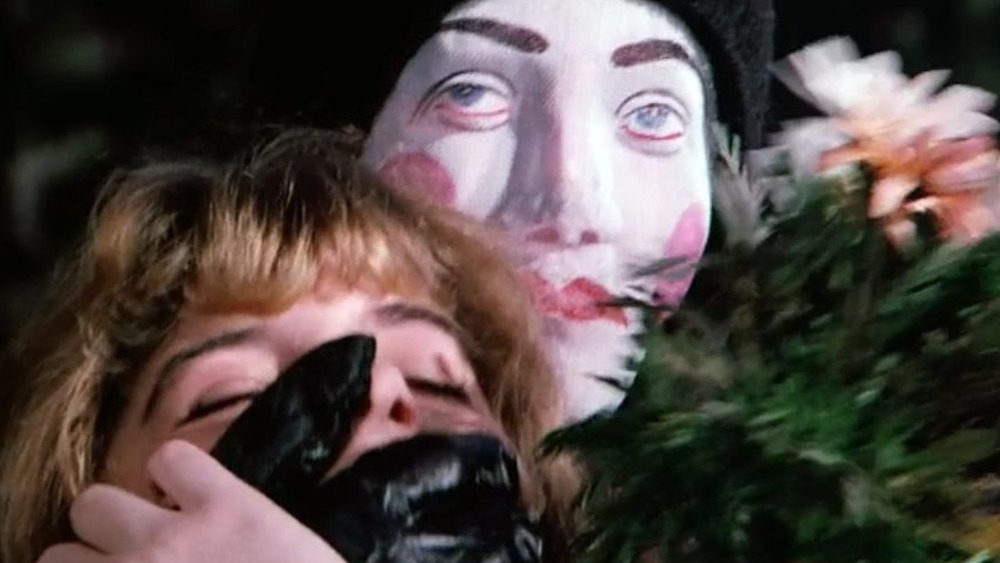
Even back in 1974, Michael Landon was pointing out to People that the evidence needed to generate a lot of material — more the vii books they'd optioned could reasonably requite them. To fill up upwardly nine seasons, they had to go creative.
And in the quest for new ideas, the writing team ventured into some strange territory. The most infamous episode is probably "Sylvia," which features a terrifying assaulter in one of the world's creepiest masks. At least it took seven seasons to go from Wilder's dear children's novels to "mime rapists." While that's probably the highlight — or lowlight — of the evidence'southward inventiveness, it too offered diversions that included circus fatty ladies and adopted orangutans. And, every bit if determined not to be topped by annihilation that went before it, the show as well made sure to take a literally explosive finale, as Walnut Grove's citizens blew up their own town.
But this weird soap opera quality is one of the things that makes Little Business firm endure. It was family unit fare that also came with archetype primetime melodrama. The testify managed to have as many water cooler-worthy twists as Game of Thrones, and fans are yet extraordinary over some of them.
This quintessentially American bear witness was popular in both French republic and Spain
Michael Ochs Archives/Getty Images
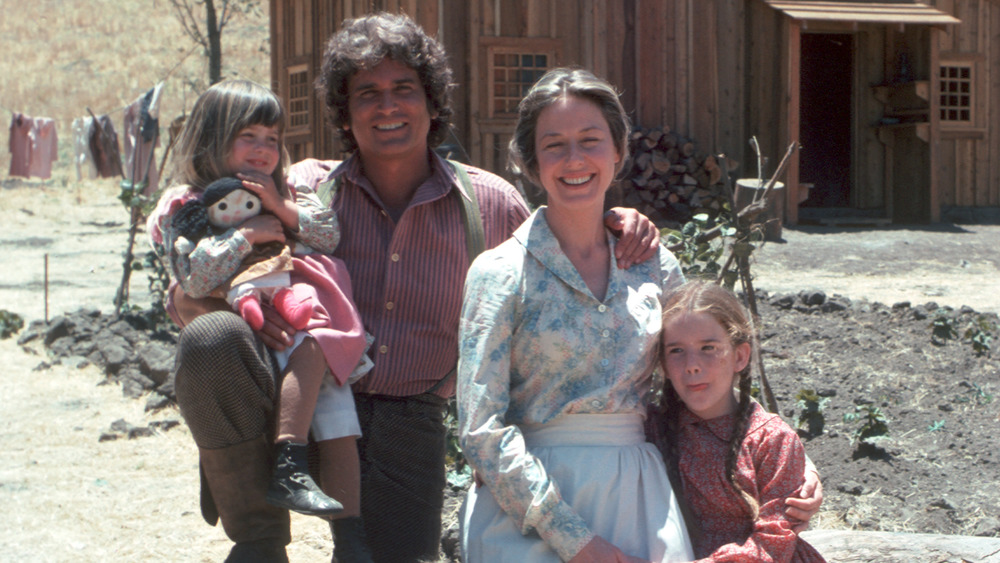
Little Business firm on the Prairie seems like it should be archetype Americana, the kind of testify that'due south barely comprehensible to countries that don't take some full general cultural nostalgia about pioneer days. But equally it turns out, the series thrived with at least some European audiences.
When information technology was ambulation, the show was a hit in Spain. The TP de Oro, a Spanish television receiver accolade, recognized Little House multiple times. In 1976, Karen Grassle won for All-time Foreign Extra for her work as Caroline "Ma" Ingalls, and Michael Landon took second place as Best Foreign Actor. The series besides won that year for Best Strange Serial every bit a whole. And in 1980, Melissa Sue Anderson — Mary Ingalls — took home the Best Strange Actress award.
Sometimes countries fifty-fifty recognize themselves in the series. Bratty Nellie Oleson is a huge striking in French republic. Alison Arngrim is sometimes there for three months, making the rounds of public appearances and meeting adoring fans. She's 1 of them. As she said to The New York Times, her French fans "don't think [Nellie's] mean. They merely think she'southward French."
Walnut Grove was always destined for destruction
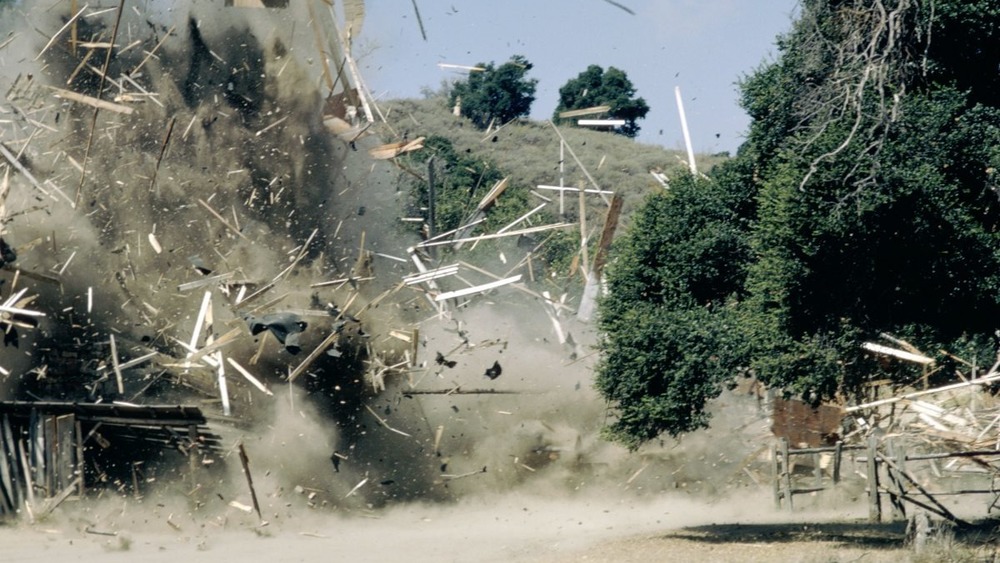
Little House on the Prairie congenital upwardly Walnut Grove as a domicile away from dwelling house for viewers, a cozy little town — albeit one unusually plagued by drama. It's a little jarring, so, to get to the concluding episode and detect that the show concludes with the townspeople blowing Walnut Grove to kingdom come.
Within the bear witness's universe, the defiant citizens of Walnut Grove decide to destroy their town because they'd rather see it turned to rubble than have information technology fall into the hands of a ruthless programmer. Merely the real reason had more to do with backstage necessity. The sets were in Simi Valley, congenital on leased country, and ane of the conditions in the original agreement was that the network would leave the land more or less equally they found it. One way or some other, the carefully created town had to become, and then executive producer Michael Landon decided to have it go in the showiest and virtually satisfying way possible. He told The New York Times, "I think it makes for a practiced potent pioneer ending. It was also a nice catharsis for the cast and crew. At that place were lots of tears when nosotros finally blew up the boondocks."
Some of those tears might've been from whoever oversaw the prove's continuity because NBC wound up making the foreign call to reverse the last two episodes' air dates. Walnut Grove blew up ... and then came back once more for a bizarre curtain call.
The set was investigated every bit a possible cancer hotspot
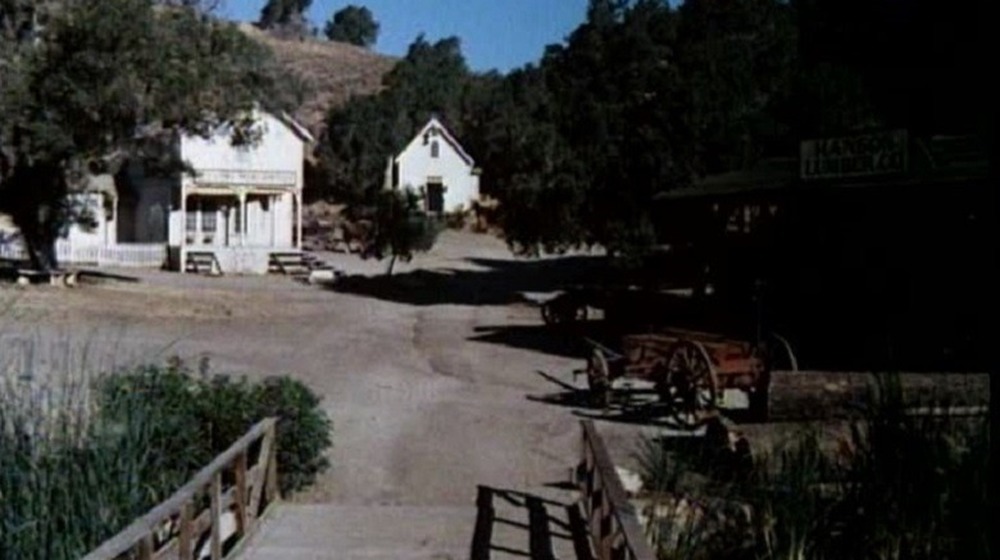
If there's i nighttime truth that can brand Little Firm on the Prairie unsettling, it's this: The show's Simi Valley set up was just 15 miles abroad from a nuclear lab. In fact, it'southward a lab that the documentary series Autopsy: The Last Hours of... alleges was "the site of the worst radioactive disaster in U.S. history."
Reportedly, there was a cancer spike in the vicinity of the Santa Susana Field Laboratory, one that afflicted hundreds of nearby residents. The numbers led to multiple studies of the area around the Santa Susana Field Laboratory, with differing results — ones that became peculiarly relevant to Little Business firm fans after 1991, when Michael Landon died afterward a struggle with pancreatic cancer.
In the end, the official Section of Toxic Substances Control report noted higher rates of bladder and lung cancer, particularly, in the surrounding area. However, it also ruled that the cancers in question weren't the ones ordinarily associated with radioactive contamination. And forensic pathologist Dr. Michael Hunter, in the episode of Dissection focusing on Landon, firmly expressed his belief that Landon's expiry had nothing to practise with his long-time Simi Valley workplace.
Bad daughter Nellie Oleson turned into a camp icon

Tristar Media/Getty Images
The over-the-top villainy of Alison Arngrim's stuck-upward Nellie Oleson, with her blonde sausage curls and pert smirk, is one of the highlights of the show. There will always exist fans who similar the bad girl best, and when that saucy badness intersects with campiness, yous get the phenomenon of Alison Arngrim, surprise gay icon.
Gay fans became Arngrim's bread and butter in one case she quit trying to shed Nellie's notoriety. She told The New York Times, "I decided to grab Nellie and run with her and never expect back. I turned toward the people who were still clapping the loudest for her." At present, she'south a regular role of Pride Calendar month and performs at gay resorts, working steadily. And her fans admire her — not just Nellie's costuming and her snippy put-downs but Arngrim's own history and resilience. She'due south spoken and written about being assaulted as a child, and she's worked for programs to help forestall sexual abuse.
Her advocacy history has also made her important to the LGBTQ+ community. She was close friends with Steve Tracy, who played Nellie's husband, Percival, and his struggle with AIDS led Arngrim to get outspoken well-nigh the disease. Beingness Nellie, she explained to ABC News, gave her an "in" to talk to audiences who wouldn't accept otherwise listened. As she explained, "Back then, people were even terrified to take a presentation about the affliction, simply they'd say, 'Oh, it's the lady from Footling House."
Picayune House on the Prairie used nostalgia to expect at current issues
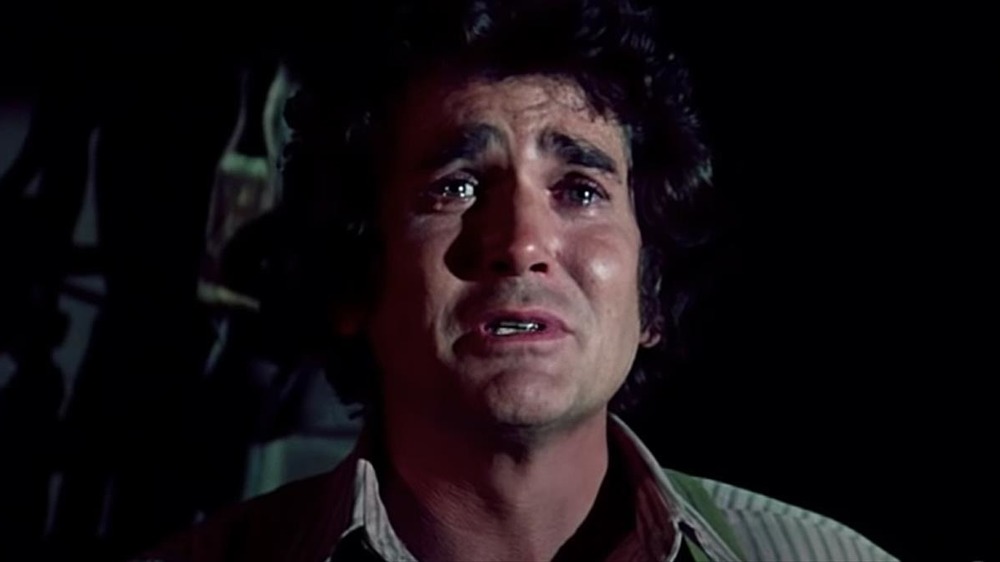
Footling House's setting was historical, merely its vision was rooted in the '70s and early '80s. In an interview with Parade, Melissa Gilbert noted, "The stories we were telling were very reflective of the fourth dimension that we were living in." Sometimes, setting the present in the past made it easier for viewers to grapple with thorny electric current events. Vietnam veterans returning domicile with drug addictions could go a more easily digested but still thought-provoking story about a morphine-addicted Civil War vet, for example.
Gilbert attributes that potent indicate of view to Michael Landon, who, she says, helped teach her how to be an activist. "He was very vocal in his support of people of color and women and very against a lot of the violence and bigotry that he was seeing in the world. That's why he wrote well-nigh it and that's why he directed people to write most it." For nine seasons, the evidence wasn't but full of calico dresses. Information technology was full of gimmicky parallels and eternal issues.
That combination of history and nostalgia is what helps continue the show meaningful. Information technology illustrates that it's possible to come through any kind of problem. If you sentinel information technology now, it shows optimism existing both on the prairie and in the real-life '70s, when the prove was being made. And as Gilbert told CBS, "Picayune House on the Prairie... provided people with the reminder of what nosotros went through when we started this country, and how hard that was. And I think we're at that place again. If nosotros could accept washed what nosotros did in the 1800s, in the 1970s, nosotros can do this."
watterscomple1992.blogspot.com
Source: https://www.looper.com/319603/the-untold-truth-of-little-house-on-the-prairie/
0 Response to "R Ingalls Best Friend on Little House on the Prairie"
Post a Comment